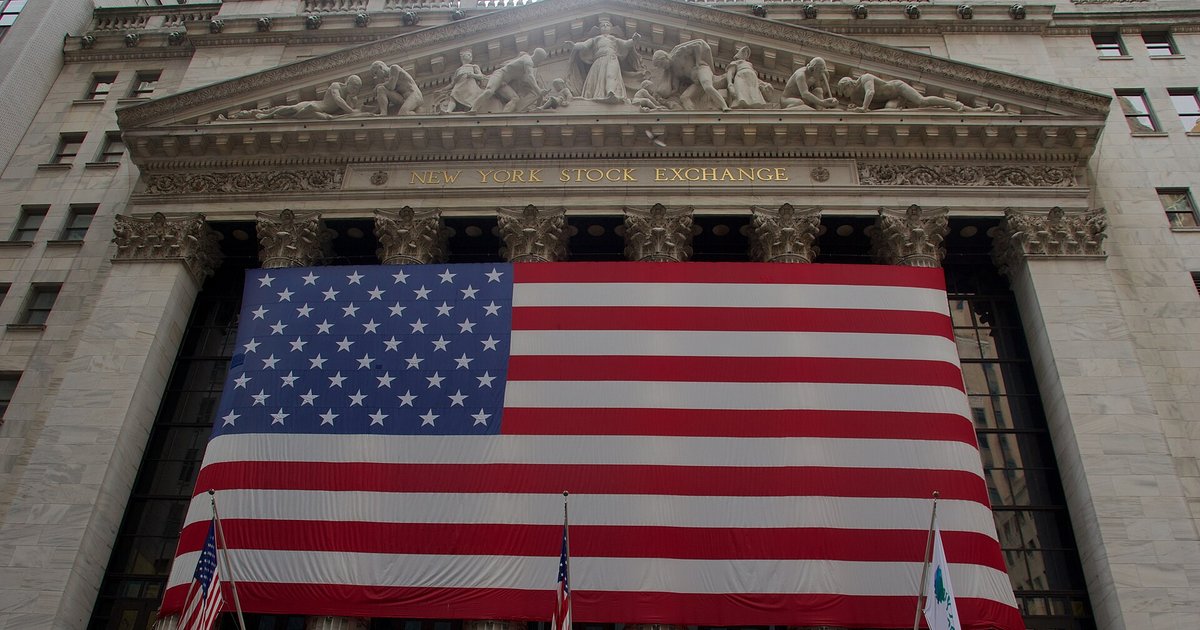

We gave the same tech-crash headline to six AIs. Their figures match, their explanations clash, and their scenario odds are almost identical. This says less about the market than about how AIs build a consensus. This article does not look for the real cause of the selloff and gives no financial advice. Its subject is how the AIs behave.
The protocol
The headline: "Global tech stocks plunge as US AI slowdown fears spread to Asia and Europe markets". Six assistants with web search answered: Gemini, ChatGPT, Mistral, Grok, Claude and Perplexity. Same instructions for all: separate facts, interpretation and speculation, invent no figure, rate five angles (Democratic regulation, the Fed, Iran and oil, Paraguay, cyber) and give three scenarios. Warnings that apply throughout:
- No figure was checked against a primary source, such as official closing prices.
- Each assistant was queried once, through its web interface. A second run might give something else.
- The 0 to 10 ratings are the AIs' own, and we do not use them.
First observation: the figures converge
Start with the Nasdaq column. Four AIs write -5.5%, one writes -3.9%, and one refuses to write anything. Then look at the Kospi: about -8% for five of the six. It is the closest thing to a consensus in this whole test.
| AI | Nasdaq | Semiconductors | Asia |
|---|---|---|---|
| Gemini | -3.9% | AMD -12%, Nvidia -6% | not cited |
| ChatGPT | -5.5% | SOX index -12.2% | Nikkei ~-6%, Kospi more than -8% |
| Mistral | -5.5% | SOX -12.2% | Nikkei -6%, Kospi -8% |
| Grok | -5.5% (Nasdaq 100: ~-6.3%) | not cited | Nikkei ~-6%, Kospi -6 to -8% |
| Perplexity | -5.5% | not cited | Nikkei -5.5 to -7%, Kospi more than -8% |
| Claude | declines to give a figure | not cited | Kospi -8% (from an article headline) |
This table is not verified data. It is a consistency test between assistants. Two details stand out. Only ChatGPT and Mistral cite the same semiconductor index, at -12.2%. And Claude is the only one to refuse a number it cannot date: the most careful answer of the six, and the only one that cannot be wrong on this table.
Why this agreement is not proof
Four identical answers look like mutual confirmation. They may come from the same wire reports. ChatGPT, Grok and Perplexity all cite Reuters among their sources. If the numbers trace back to one agency, four AIs are one source repeated four times. We do not know which sources actually overlap here: that is a hypothesis. But agreement is not independent verification until the origin of the numbers is traced. Only a comparison with official closing prices would turn these values into facts.
Second observation: the causes diverge
The numbers match. The explanations do not. On the five angles we proposed, the AIs never reach one shared reading, and on several they contradict each other from the same facts. Below, angle by angle, is what each one actually said. The "own rating" is each AI's self-assessment from 0 to 10: there is no common scale, so an 8 from one and a 6 from another cannot be compared. It is shown only to expose the gaps.
| Angle | Verdict | The clash, in one line |
|---|---|---|
| Democratic regulation | Plausible | Five AIs make it the trigger, Claude reads it the other way round |
| The Fed and inflation | Contested | Hike, cuts, stuck or ambiguous: four directions |
| Iran and oil | Contested | Brent at $97 or above $107, trigger or amplifier |
| Paraguay | Unsupported | One fact, opposite conclusions, ratings from 3 to 8 |
| Cyber | Unsupported | No documented link, ratings from 2 to 7 |
Democratic regulation: plausible
| AI | What it said | Own rating |
|---|---|---|
| ChatGPT | The real political trigger: local restrictions, environmental limits and permit delays raise costs. Caveat: winning midterms does not mean control of federal AI policy. | 9 |
| Gemini | Political shift tightens rules on safety, data and data-center environmental impact, which lengthens deployment and raises the cost of capital. | 8 |
| Perplexity | Main cause, but a Congress can tighten permits and power use without guaranteeing a binding law. | 8 |
| Grok | Majorities plus calls for a national moratorium slow permits and capex. "Direct link documented." | 8 |
| Mistral | Catalyst, not root cause. Federal legislation unlikely because of a presidential veto, so uncertainty lasts. | 6 |
| Claude | Reverses the arrow: a crash feeds calls to regulate AI, and savers' losses can hurt the majority in power. Does not attribute the selloff to the Democratic win. | 4 |
Most cited does not mean demonstrated. Five AIs treat the midterms as the trigger and one treats them as a consequence, and they do not even agree on whether Washington can act.
The Fed and inflation: contested
| AI | What it said | Own rating |
|---|---|---|
| ChatGPT | Reuters, it says, prices a probability above 80% of a December hike. Less AI spending could ease pressure, but oil from Iran would reverse that. | 8 |
| Gemini | The wealth effect tightens financial conditions and may push the Fed to cut faster, provided inflation stays calm. | 7 |
| Claude | Disinflationary: less investment, negative wealth effect. High oil offsets it. Markets may price cuts, unless energy blocks them. | 5 |
| Grok | Lower AI capex reduces growth and inflation, opening the way to a Fed pivot. | 6 |
| Perplexity | Net effect ambiguous: slower growth, but a flight to bonds may also lower rates. | 6 |
| Mistral | Falling Treasury yields signal a flight to quality. The Fed stays stuck between inflation and financial stability. | 6 |
This is the starkest case. ChatGPT cites a hike as likely. Gemini, Claude and Grok expect easing. Mistral sees paralysis and Perplexity does not decide. When the direction itself is disputed, the angle explains nothing yet. The question can be settled on rate futures, not in a chatbot.
Iran and oil: contested
| AI | What it said | Own rating |
|---|---|---|
| ChatGPT | A distinct, secondary risk: escalation would raise oil and inflation expectations and reinforce the correction; a deal would relieve markets. | 7 |
| Gemini | In a risk-off market, an Ormuz escalation would add a supply shock and stagflation. | 6 |
| Mistral | Paradox: the Democratic wave was first read as pressure to end the war. A settlement would lower oil (Brent around $97, down 4.6% the day before). | 5 |
| Claude | Oil may fall on lower expected demand; Ormuz tension would do the opposite. Undated reports mention oil above $107 and an interim US-Iran deal, which it does not attach to this episode. | 4 |
| Grok | Parallel conflict, weak correlation with the AI trigger. | 4 |
| Perplexity | Would amplify the selloff, but is not the current trigger. | 4 |
Two disputes at once. On figures: Brent around $97 for Mistral, above $107 in the undated report Claude declines to use. On role: trigger, amplifier or a separate story. A shaky number feeding a shaky role.
Paraguay: unsupported
| AI | What it said | Own rating |
|---|---|---|
| ChatGPT | Cites the Crusoe and Araico AI cloud project backed by Itaipu, announced 22 October, start planned 2027. A US slowdown could delay or renegotiate it. Soy is only an indirect channel. | 8 |
| Grok | Same project, opposite reading: a US slowdown pushes hyperscalers toward cheap hydropower. | 7 |
| Gemini | Less data-center demand means less electricity revenue and more pressure on debt. | 4 |
| Mistral | Less foreign demand for cheap energy. Crypto mining hurt by risk aversion. | 3 |
| Claude | Lower demand for data centers and crypto. Soy follows the dollar and China. Direct exposure judged weak. | 3 |
| Perplexity | Direct effect weak, because Itaipu mainly exports to Brazil. Soy depends on China, not AI. | 3 |
One fact, two opposite stories (winner or loser), and ratings from 3 to 8 for the same link. No AI documents a causal path to the selloff. It is the best example of a story built after the fact.
Cyber: unsupported
| AI | What it said | Own rating |
|---|---|---|
| ChatGPT | Iran-linked actors have documented capabilities, but "no proof" that the correction results from an attack. | 7 |
| Perplexity | More centralized AI infrastructure under financial pressure is a more attractive target. Link to Iran "contingent". | 5 |
| Gemini | Weaker security budgets and possible attacks on compute farms. | 5 |
| Grok | Data centers more vulnerable under stress. A hypothesis not directly linked. | 3 |
| Mistral | Would amplify a panic; cites an alleged Binance hack. | 2 |
| Claude | "No proof of a causal link": vigilance, not a finding. | 2 |
Same sentence from several AIs ("no proof"), yet ratings from 2 to 7. The rating does not measure the evidence, it measures the mood. At best a tail risk.
Why divergence is expected, yet hard to settle
Explaining a market move means ranking simultaneous facts, relying on reliable timestamps and consulting primary data. Claude says so: several nearby episodes (June, July, late October) look alike, and without cross-checked timestamps it cannot say how much each factor weighs. That the AIs diverge is therefore normal. The real problem lies elsewhere: no common method lets us rank them. Each picks its own sources, weighs them its own way and does not show its reasoning. Faced with two opposite explanations, the reader has no shared criterion to decide.
Third observation: six stories, one set of odds
This is the result that surprised us most. Each AI proposed a bullish, central and bearish scenario. The table below shows what came back.
| AI | Bullish | Central | Bearish |
|---|---|---|---|
| Gemini | 20% | 55% | 25% |
| ChatGPT | 25% | 50% | 25% |
| Mistral | 25% | 45% | 30% |
| Grok | 25% | 50% | 25% |
| Perplexity | 25% | 55% | 20% |
| Claude | 20% | 50% | 30% |
| Range | 20-25% | 45-55% | 20-30% |
Result: the six forecasts cannot be told apart. Averaged, they read about 23% bullish, 51% central, 26% bearish. No column varies by more than ten points, and the central case dominates everywhere. Horizons also differ, and the table hides it. Only ChatGPT (1 to 3 months) and Mistral (12 months) state one; the other four give none. A 30% bearish case over a quarter and over a year are not the same claim, yet they sit side by side in the same range. Even one assistant moved: Claude's two passes gave 20/55/25 and 20/50/30. Now put that next to the previous section. These AIs disagree on whether the Fed hikes or pivots, on whether oil is a trigger or an amplifier, on whether Paraguay is a winner or a non-event. Opposite explanations should lead to different odds. They lead to the same ones. So the percentages were not computed from the explanations. Three possible reasons, none demonstrated: a shared reasoning template ("a quarter, a half, a quarter"), a dominant media story that sets the frame, or simple imitation of format, where each model produces the expected triplet with round numbers. These percentages are judgments presented as calculations.
What this test reveals about AIs
- Agreement is not validation. Several assistants can repeat the same source.
- Numbers get copied, causes get made up. A figure can be cross-checked, an explanation is composed, and it can contradict another AI's.
- Caution shows. Declining to give a figure you cannot date beats a precise number with no date.
- Probabilities are a format. Percentages give an impression of rigor that nothing here supports.
- Stories can come before evidence. Paraguay shows it: one fact, several stories.
- One assistant can vary. In a first pass, a lighter Claude version had found the link to the midterms that Claude did not. One trial, so not a law.
The practical rule
Use an AI to map hypotheses: list the possible explanations, the facts that support them and those that contradict them. Never use it to settle a market causality without primary sources. When several assistants say the same thing, first ask whether they read the same page.
Method and limits
Six models answered the same prompt on 6 November 2026 through their web interfaces, with web search on: ChatGPT, Claude, Gemini, Grok, Mistral and Perplexity. One run each, answers limited to about 700 words. Attributions per AI come from Satcove's reading of those answers; full transcripts are not published. Figures are the models' own and were not checked against official closing prices. This is not financial advice.