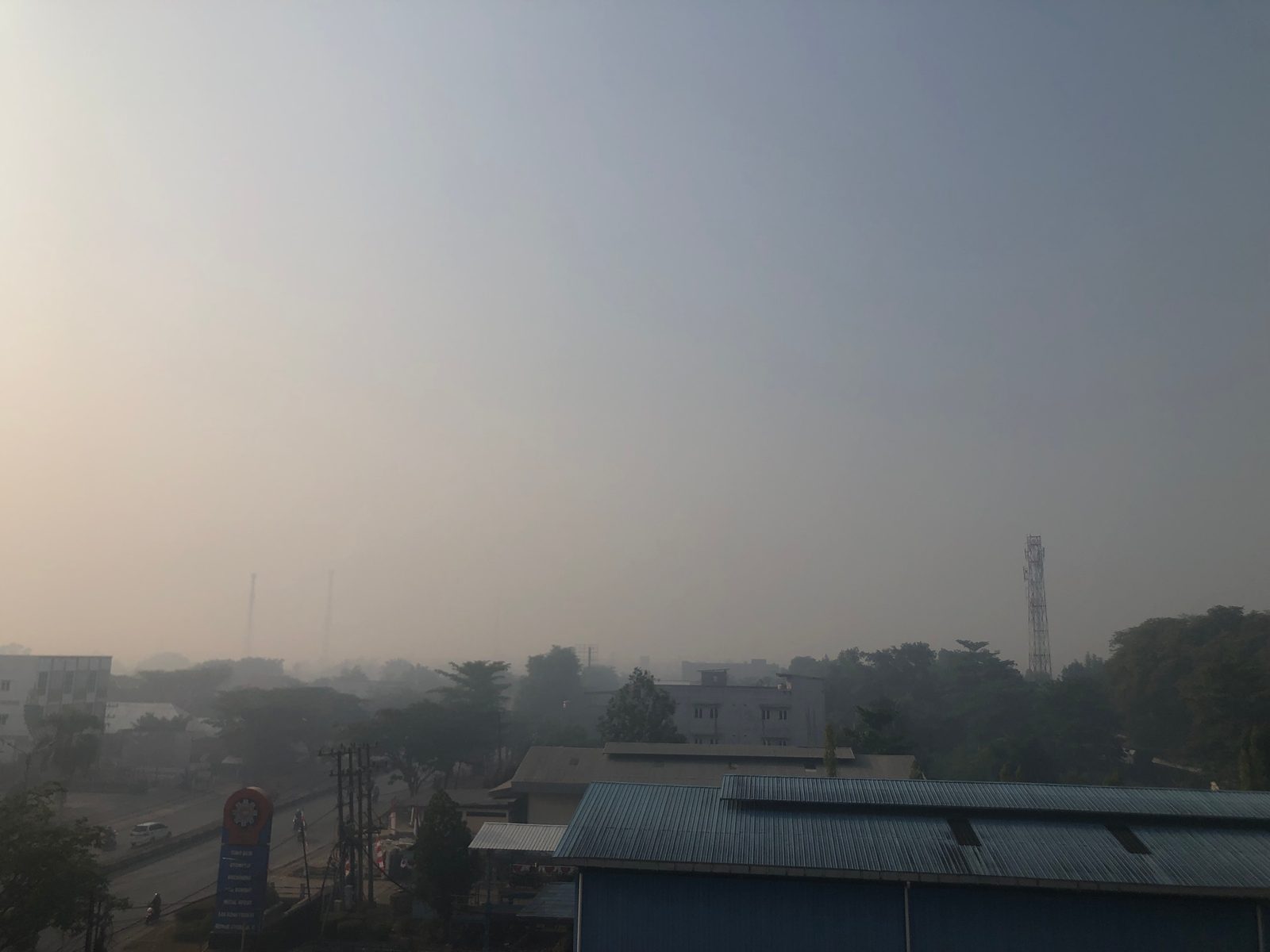
The New York Times reports that support for Indonesian President Prabowo Subianto has fallen sharply as the country goes through one of its worst wildfire and haze seasons on record. According to the Times, the government has declined to declare a national disaster, a step that would make it easier for foreign aid to arrive, and the haze has reached Malaysia, Singapore and the Philippines.
We put the same five questions, in fresh conversations with no history, to six AI systems: ChatGPT, Gemini, Perplexity, Mistral, Grok and Claude. This is not an analysis of Indonesia. It is a look at what the models say when given the same facts, and where they stop agreeing.
What is established, and what is not
Reported by the New York Times. Support for Prabowo has dropped, the government has not declared a national disaster, and haze has crossed into neighbouring countries. We could read only the opening of the article, which is behind a paywall.
Context we gave the models, not verified by us. About 1.9 million hectares reported burned between January and September, protests on October 20 and 28, and one SMRC poll putting approval at 44.5%, against 81.2% in November 2025 and 51.1% in July 2026. Other pollsters report different figures. These came from public reporting that we have not checked against primary sources, and they may have steered the answers.
We name no company. Responsibility for specific fires is contested and nothing in this piece establishes it.
Why is his support falling?
We asked each model to weigh five possible causes: the handling of the fires and haze, the economy, corruption, authoritarian drift, and the free-meals programme.
Four models put the fires and haze first or level with the economy. Grok is the most categorical: it makes the haze by far the biggest factor. ChatGPT and Perplexity treat the fires and the economy as equally important. Gemini ranks the fires first and gives the free-meals programme more weight than anyone else, placing it third.
Claude is the outlier. It puts the economy first and sees the fires as an accelerant rather than the root cause, reasoning that by the poll figures in our prompt most of the fall, from 81% to about 51%, came before the worst of the haze. The July reading does come before the autumn peak, which fits that argument, but we have not checked the exact sequence of fires and polls.
On the other causes the models are closer. Corruption and authoritarian drift come in the middle for all six, and the free-meals programme is usually last, except in Gemini's answer.
Who is to blame for the fires?
We asked the same models to split responsibility between concession-holding companies, weak government enforcement, El Niño and smallholder farmers.
Five of the six put companies first. Claude is the exception: it puts weak enforcement first and companies second. ChatGPT is the most firm on companies. Gemini gives the weather the most weight, ranking El Niño second. Grok and Perplexity give smallholders more weight than the others, while ChatGPT, Gemini and Claude put them last.
These are opinions about the general picture, not findings about any fire or any actor. The context we supplied mentions sanctions and weak enforcement, which may have pushed the models toward those answers.
Will there be a national disaster declaration?
This is where the answers split. We asked for the probability of a national disaster declaration before January 31, 2027, and for the chance that approval falls below 40% in the next major poll. The figures below are each model's own guess, not a forecast.
| AI | Disaster declared by Jan 31, 2027 | Approval below 40% in next poll |
|---|---|---|
| ChatGPT | 35% | 25% |
| Gemini | 15% | 55% |
| Perplexity | 35% | 55% |
| Mistral | 35% | 45% |
| Grok | 25% | 35% |
| Claude | 10% | 35% |
The same facts give a disaster probability anywhere from one in ten to more than one in three. Claude argues the end of the dry season will remove the pressure. Perplexity argues that the scale of the haze, its cross-border reach and the protests could force a reversal. Neither claim is backed by data in the answers. On the poll, ChatGPT thinks a drop below 40% is unlikely, while Gemini and Perplexity think it more likely than not.
We show no average. Averaging six guesses that range from 10% to 35% would give a number that none of the models believes.
The angle each one chose
When asked what the best article angle would be, four of the six framed it as a question of political choice: whether refusing to declare a disaster protects the government's image or political control at the expense of public health and aid. Gemini framed it as environmental and policy failures that compound and erode legitimacy at home and abroad. Mistral called it a governance failure rather than a weather event.
Claude's framing was the most pointed: whether refusing to declare a disaster, together with sanctions that critics say never stick, reflects a choice to protect powerful land-clearing interests. That is a question the model raises, not a finding. We have not put it to the government or to any company.
Six answers side by side
A summary of each system's answers. It reflects what each AI said, not verified fact.
| AI | Biggest cause of falling support | Who it blames most for the fires | Disaster declaration |
|---|---|---|---|
| ChatGPT | Fires and economy, level | Companies, most firmly | Fairly possible |
| Gemini | Fires, with free meals third | Companies, with El Niño second | Unlikely |
| Perplexity | Fires and economy, level | Companies, smallholders next | Fairly possible |
| Mistral | Fires, then economy | Companies, then enforcement | Fairly possible |
| Grok | Fires, by a wide margin | Companies, smallholders level with El Niño | Possible, less likely than not |
| Claude | Economy, fires as accelerant | Weak enforcement, companies second | Very unlikely |
What matters next
The answers work best as a list of hypotheses to check: who holds the concessions, what happened to past fines, how the polls compare across pollsters, and what a national disaster declaration would change in practice. They do not establish responsibility for any fire and they do not predict what the government will do.
On the past, the models largely tell the same story. On what happens next, their own odds differ by a factor of three. We will update this piece if the declaration status, the next poll or the Times reporting changes the picture.
How we did this
On November 10, 2026 we sent the same five-question prompt once to each system, in a new conversation, through its normal web interface: ChatGPT (Think), Gemini (Auto), Perplexity (Pro), Mistral (Fast), Grok (Fast) and Claude (Sonnet 5.5, Medium), using personal accounts. There was no follow-up. The modes differ, and only Gemini said it searched the web; the other five said they did not. The percentages are the models' own judgments, without method or historical data. They are not expert forecasts, and the comparison is not on equal terms.
Sources
- The New York Times, Nov. 10, 2026, "As Fresh Air Becomes a Luxury, Many Indonesians Turn on Their Leader": https://www.nytimes.com/2026/11/10/world/asia/indonesia-wildfire-protests-prabowo.html
Photo: haze over a town in South Kalimantan, August 21, 2026, by Zenibas via Wikimedia Commons (CC0). It is an illustration and does not show the events or people discussed above.