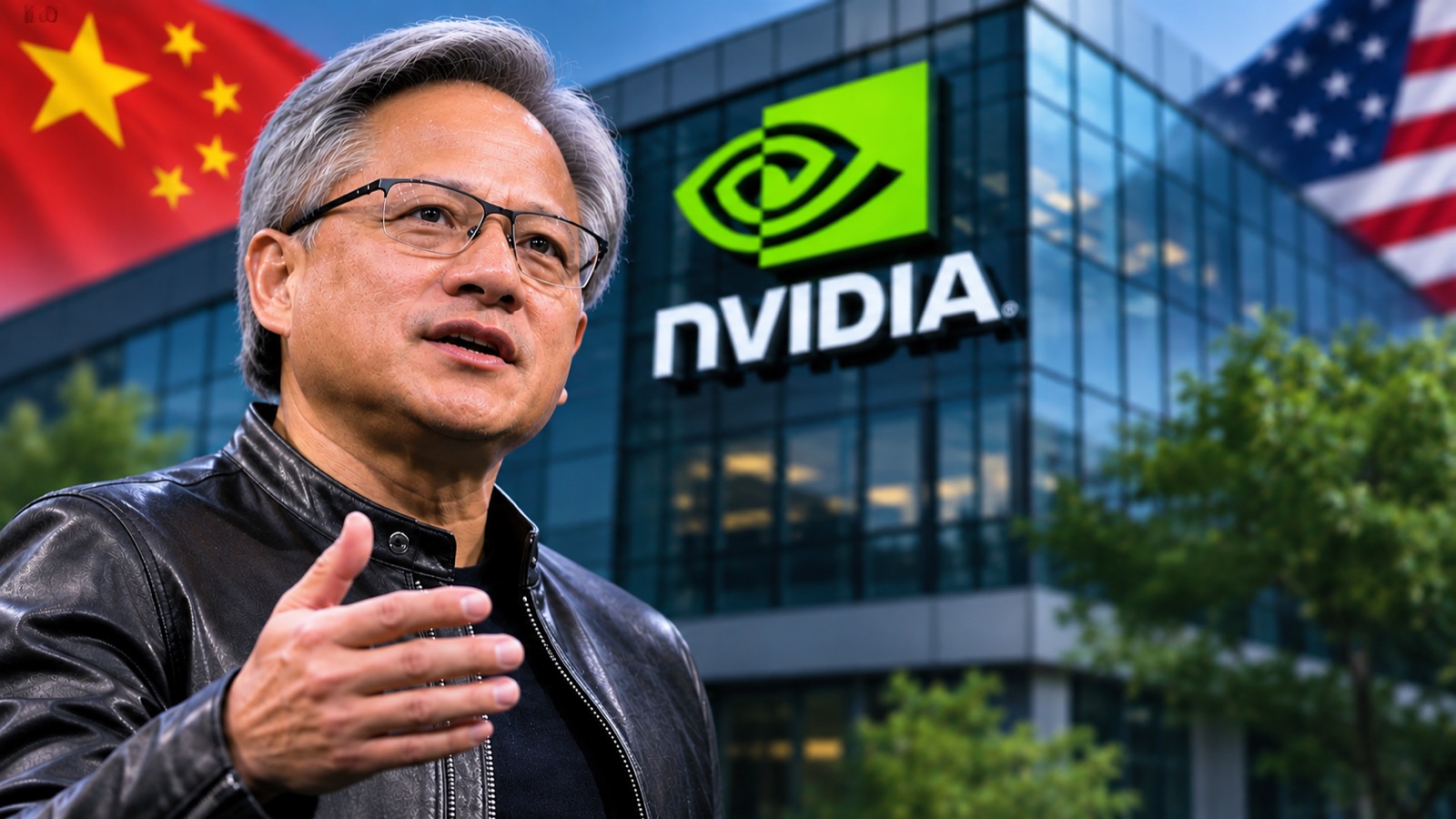
Nvidia's board has opened an independent investigation into Jensen Huang, its chief executive, after reports that he had a relationship with a woman whom US intelligence officials reportedly suspect of working for China. Huang has admitted the affair. No public evidence shows that any information was leaked.
We put the same nine questions, in fresh conversations with no history, to six AI systems: ChatGPT, Gemini, Perplexity, Mistral, Grok and Claude. Their answers do not settle the case, and they are not evidence in it. What they offer is six readings of a story whose central allegations remain unresolved. Together they show where the real questions lie: less in the affair itself than in whether the board's inquiry will be credible, and in what Washington does next.
What is established, and what is not
Established. On November 8, Nvidia's board said it was starting an independent investigation after reporting that Huang "has been the target of a foreign intelligence effort." A committee of independent directors, assisted by outside counsel, will oversee it. The board said it "has no reason to believe" that national security or Nvidia secrets were compromised, and that it has confidence in Huang and his leadership team. In an email to staff, Huang wrote: "I was unfaithful to my wife." He said he would cooperate fully, and Nvidia says he intends to continue as CEO without interruption. Three House Republican committee chairs have asked him for a closed-door briefing on November 18. Nvidia reports third-quarter earnings on November 17. (Sources: Nvidia board statement; CNBC, November 8.)
Alleged, not proven. According to reports in The New York Times and the Financial Times, as summarized by CNBC, US intelligence agencies have expressed concern that the woman has been passing information to Beijing. She is described as affiliated with Megaspeed, a cloud company and Nvidia customer accused of helping restricted Chinese companies obtain Nvidia AI chips. These claims rest on unnamed officials. There is no indictment, no charge and no public evidence of a transfer of information. Chinese officials have called the claims groundless.
We do not name the woman. She has not been charged, the suspicion rests on anonymous intelligence assessments, and her name adds nothing to the questions at stake. Two of the six AIs also declined to name her; four did not.
An affair, an alleged influence operation and an unproven leak
The clearest point of agreement is also the most useful. All six AIs separate an admitted relationship, an alleged influence operation and a proven transfer of information, and all six say the third has no public support.
Claude put the distinction as one between being "targeted" and being "compromised": a relationship can be genuine and still be exploited by someone else. ChatGPT reached a similar place by another route. Nvidia's proprietary data and US classified information are different categories, it noted, and even if the woman were an operative, Huang could have been an unwitting target.
This matters because the public conversation tends to collapse the rungs into one. An admitted affair is a fact. An influence operation is an allegation. A leak is, for now, a hypothesis.
What would China want?
Here the answers diverge in emphasis rather than in substance.
Mistral pointed to the US government's thinking on export controls as a possible object of interest, given Huang's closeness to the administration. Grok listed product roadmaps, customer lists and internal assessments of US policy. Perplexity argued that even non-classified commercial data can matter if it reveals supply bottlenecks or ways around export rules, and framed the Megaspeed connection as an alleged indirect channel, not a demonstrated transfer.
Gemini was the most restrained. It called a proven leak speculation and observed that chief executives tend to hold high-level strategy rather than engineering detail.
Taken together, the answers widen the question beyond chip designs to include commercial strategy and political insight.
Can Huang stay?
Five answers say yes, with conditions, and Gemini treats his staying as the board's stated position, with his longer-term tenure depending on what independent counsel finds. None argued that an affair alone forces a chief executive out.
The conditions are where the answers add something. ChatGPT is the most explicit about what would make suspension defensible: deliberate concealment, serious conflicts of interest, disclosure of protected information, or obstruction. Perplexity says the decisive issue is not the affair but whether the board can show that no security control or export-control duty was compromised. Mistral invokes the presumption of innocence and says removal would be justified by an information compromise or a cover-up.
Two answers go further and propose interim safeguards while the inquiry runs: ChatGPT suggests temporary restrictions on sensitive access, and Claude suggests limits on China-related decisions.
Claude most explicitly questions the perceived independence of the committee itself. Several directors are long-serving, it notes, so how independent the review will look is a fair question. It rates that point as a hypothesis of low-to-medium confidence.
On how much Nvidia depends on its founder, the answers cluster rather than clash. Grok calls the dependence "high but not absolute," Perplexity "materially, but not solely." Claude sees high key-person risk probably softened by a deep bench, ChatGPT describes it as significant, and Mistral calls it real and now concrete. Gemini describes Huang as central to the company's vision.
Exports, China and Congress
The answers part ways more clearly on what could actually change for Nvidia's business.
ChatGPT gives the most detailed account: tighter scrutiny of export licences, possible Chinese counter-measures, and a longer-term risk that restrictions push customers toward alternative ecosystems. Mistral and Claude point to Congress, and specifically to the November 18 briefing request, as the channel through which enforcement, including checks on intermediaries such as Megaspeed, could tighten. Perplexity and Grok describe conditional regulatory scrutiny without a direct supply-chain effect. Gemini offers only a hypothesis, that the CUDA software ecosystem protects Nvidia's position.
Among the six, Mistral, Grok and Claude treat Congress as a driver; the ChatGPT and Perplexity summaries do not. That is a difference of emphasis, not a disagreement.
The market
As of 4:18 a.m. ET on November 9, Yahoo Finance showed Nvidia at $177.66 in pre-market trading, down $8.98 (4.81%) from the November 6 close of $186.64. Pre-market quotes are indicative and change quickly. A one-day move does not show what caused it, and none of the six AIs treated it as a verdict on the case.
None of the six gave a share-price forecast. Their answers instead focused on possible mechanisms: a governance or key-person discount, tighter regulatory scrutiny and, over time, Nvidia's business fundamentals. The next scheduled opportunity for management to address investors is the November 17 earnings call.
Could this be the start of a market crisis?
Not on this evidence. The question is fair, because the tension was already visible days earlier. On November 6 we put a tech-selloff headline to the same six AIs and published what they said: they largely agreed on the headline figures, disagreed on the causes, and every one of their scenarios gave a worsening market only 20 to 30%. That article also warned that none of those figures had been checked against primary sources.
The Huang inquiry adds a second, different source of pressure on top of it: a governance question at the most closely watched company in the AI trade. None of the six AIs treated it as the start of a crisis. Their mechanisms are narrower: a key-person or governance discount, tighter export scrutiny, and pressure from Congress. The two dates to watch are the November 17 earnings call and the November 18 House briefing request.
A pre-market move of 4.81% on November 9 (Yahoo Finance, 4:18 a.m. ET) is a symptom, not a cause: it does not show whether the investigation, the earlier selloff or something else is driving it. Check the live quote.
How the story can mislead
The AIs flagged similar traps: treating "targeted by" as "compromised by"; treating anonymous intelligence leaks as proof; reading the board's "no reason to believe" as either clearance or a cover-up; reading China's denial as evidence either way; letting the admitted affair stand in for the espionage question; and taking a share-price move as a verdict. Mistral added two sharper ones: that the intelligence claim circulates through outlets citing one another, and that both the US leaks and China's denial come from interested parties.
The next step is to establish which allegations can be substantiated, through the board's inquiry and any formal findings by US authorities.
Six answers side by side
A summary of each system's answers on the main questions. It reflects what each AI said, not verified fact.
| AI | Can Huang stay? | What it stresses | What would change its view |
|---|---|---|---|
| ChatGPT | Yes, with conditions. Suspension defensible on concealment, serious conflicts, disclosure of protected information or obstruction. Suggests temporary restrictions on sensitive access. | Nvidia's data and US classified information are different categories; Huang could have been an unwitting target. Export licences may face tighter scrutiny, with possible Chinese counter-measures. | Evidence of what was communicated or transferred. |
| Gemini | Staying is the board's stated position; longer-term tenure depends on what independent counsel finds. | A proven leak is speculation; CEOs hold strategy more than engineering detail. Hypothesis: the CUDA ecosystem protects Nvidia's position. | Law-enforcement action, the final board report, Commerce Department licensing. |
| Perplexity | Yes, with conditions. The decisive issue is whether the board can show no security or export-control duty was compromised. | Even non-classified commercial data can matter (supply bottlenecks, ways around export rules). Megaspeed is an alleged indirect channel, not a demonstrated transfer. | Evidence of what was communicated or transferred. |
| Mistral | Yes, with conditions. Presumption of innocence; removal justified by an information compromise or a cover-up. | US export-control thinking as a possible target of interest. Congress (the November 18 briefing) as a driver of tighter checks on intermediaries. Warns that reports cite one another. | Clarity on the woman's status and the intelligence basis. |
| Grok | Yes, with conditions. Dependence on Huang "high but not absolute". | Product roadmaps, customer lists and internal assessments of US policy as possible targets. Congress as a driver. | Clarity on the woman's status and the intelligence basis. |
| Claude | Yes, with conditions. Suggests limits on China-related decisions during the inquiry. | "Targeted" is not "compromised". Questions the perceived independence of the committee (low-to-medium confidence). High key-person risk, probably softened by a deep bench. Congress as a driver. | Evidence of what was communicated or transferred. |
All six name the committee's findings and a formal step by US authorities among the developments that would change their view.
What matters next
Across the six responses, the broad assessment is consistent: Huang's continued leadership depends on what the inquiry establishes, while a transfer of confidential information remains unproven in the public record.
The differences concern where the consequences could emerge. Claude focuses on the credibility of the board's review. ChatGPT sets out circumstances that could justify suspension, and possible consequences for export licences. Mistral highlights political insight and congressional pressure, while Perplexity stresses the strategic value of commercial information. These perspectives complement one another more often than they conflict.
All six name the committee's findings and a formal step by US authorities among the developments that would change their view. The third check varies: ChatGPT, Perplexity and Claude want evidence of what was communicated or transferred; Mistral and Grok want clarity on the woman's status and the intelligence basis; Gemini points to law-enforcement action, the final board report and Commerce Department licensing. The admitted relationship alone is not what the answers say would move the assessment.
How we did this
We put the same nine-question prompt to six AI systems on November 9, 2026, each in a new conversation with no history, through its web interface. The prompt stated the facts as of November 8, asked each system to separate established fact, allegation, hypothesis and speculation, and banned investment advice. Mistral and Grok ran in fast modes and ChatGPT in a temporary chat; several of the six searched the web, so the facts they report come from press coverage they did not verify. We checked the board statement and Huang's staff email against the published texts. AI systems do not know the future, and their agreement is not evidence. This article does not say that Huang or anyone else is a spy.
Sources
- Nvidia, Statement From NVIDIA Board of Directors, Nov. 8, 2026: https://nvidianews.nvidia.com/news/statement-from-nvidia-board-of-directors
- CNBC, Nov. 8, 2026: https://www.cnbc.com/2026/11/08/nvidia-jensen-huang-investigation-china-spy.html
- CNBC, Nov. 8, 2026, Huang's email to staff and the board statement: https://www.cnbc.com/2026/11/08/nvidia-jensen-huang-email-board-of-directors-statement.html