France confirms first documented human case of Shamonda virus: what six AIs agree on, and what they left out

12 min readHealth
FRFrench Ministry of AgricultureFRFrench Ministry of HealthWOWorld Health Organization (WHO)EUEuropean Centre for Disease Prevention and Control (ECDC)HOHospices Civils de LyonEmerging infectious diseasesZoonotic virus transmissionPublic health surveillanceShamonda virusFirst human caseCulicoides midges
Satcove NewsHealth6 AI models, 3 reportsAutomated analysis, not reviewed by a person
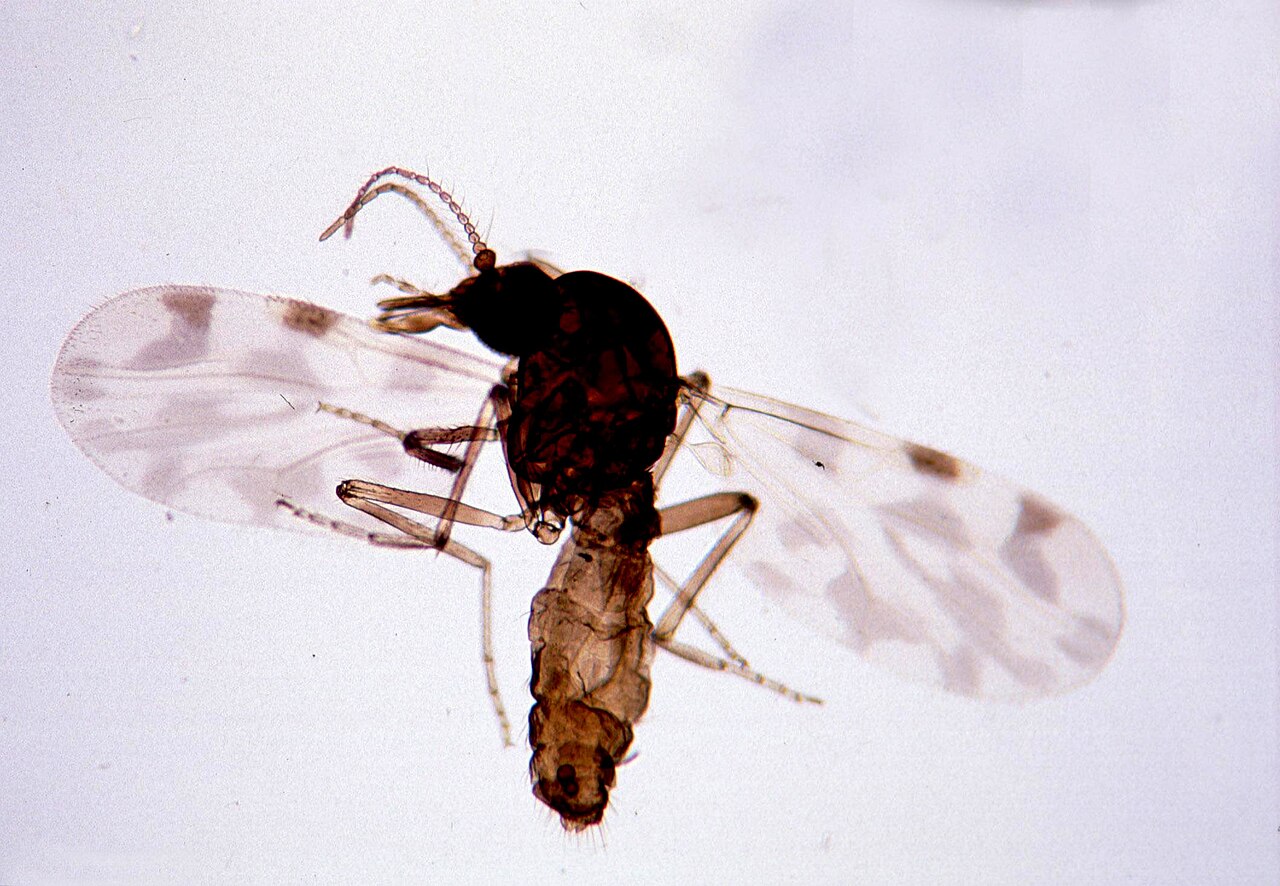
Culicoides imicola, a biting midge (Shamonda virus vector family)
Illustrative photo: Culicoides imicola, a biting midge (Shamonda virus vector family), not from the reported event. Alan R Walker, CC BY-SA 3.0, via Wikimedia Commons.

Quick answer

  • Reported: Franceinfo, Euronews, and Vidal all confirmed the first human Shamonda virus infection worldwide in a patient in Lyon.
  • Stated by French Health and Agriculture Ministries: Based on current virus knowledge, "aucun risque sanitaire pour la population générale n'est identifié à ce jour" (no health risk to the general population is identified to date), per Franceinfo.
  • Reported: According to investigations, the patient's brain complications were "very likely linked" to Shamonda virus infection, per Euronews.
  • Panel result: no direct contradiction, but 4 critical and 3 neutral omissions across 12 points.
  • Reliability signal: the source check identified no unsupported additions.

4 / 12

Points all models share

8 / 12

Points where they differ

0

Direct contradictions

6 of 6

Models that ran

Who said what

Same reports, independent analyses. Highlighted rows are the points where the models that ran differ.

PointClaudeGPTGeminiMistralPerplexityGrok
French authorities confirmed the first documented human case of Shamonda virus worldwide in early October 2026.Includes the pointIncludes the pointIncludes the pointIncludes the pointIncludes the pointIncludes the point
The patient was severely immunocompromised and undergoing treatment for a serious illness in Lyon.Includes the pointIncludes the pointIncludes the pointIncludes the pointIncludes the pointIncludes the point
Shamonda virus was first detected in French cattle during summer 2026.Different emphasisIncludes the pointIncludes the pointIncludes the pointIncludes the pointMentions it only in general termsIncludes the point
The virus is transmitted by bites from Culicoides midges.Includes the pointIncludes the pointIncludes the pointIncludes the pointIncludes the pointIncludes the point
Authorities hypothesize the human infection occurred via a Culicoides midge bite in eastern France.Neutral omissionIncludes the pointIncludes the pointLeaves it outIncludes the pointIncludes the pointIncludes the point
Brain complications observed in the patient before death were very likely linked to Shamonda virus infection.Critical omissionIncludes the pointLeaves it outIncludes the pointLeaves it outIncludes the pointIncludes the point
Authorities say no health risk to the general population has been identified based on current virus knowledge.Includes the pointIncludes the pointIncludes the pointIncludes the pointIncludes the pointIncludes the point
Shamonda virus was first detected in Nigeria in the mid-1960s and has since appeared in parts of Africa and Japan.Critical omissionIncludes the pointLeaves it outIncludes the pointLeaves it outLeaves it outLeaves it out
The virus spread to Western Europe for the first time during summer 2026, affecting multiple countries.Critical omissionIncludes the pointLeaves it outLeaves it outLeaves it outLeaves it outLeaves it out
Shamonda virus primarily affects cattle but has also caused sporadic infections in small ruminants and horses.Neutral omissionLeaves it outIncludes the pointLeaves it outIncludes the pointIncludes the pointLeaves it out
Authorities previously believed Shamonda virus was non-transmissible to humans until this case.Critical omissionLeaves it outIncludes the pointLeaves it outLeaves it outLeaves it outLeaves it out
French authorities notified international health bodies including the WHO and ECDC about the case.Neutral omissionLeaves it outLeaves it outIncludes the pointLeaves it outIncludes the pointIncludes the point

What each mark means

  • ✓Includes the point
  • ~Mentions it only in general terms
  • 0Leaves it out
  • –Model did not run on this story

How a difference is classified

  • ContradictionTwo models assert incompatible things.
  • Critical omissionA model leaves out a point that changes how a reader understands the story.
  • Neutral omissionA model leaves out a minor detail.
  • Different emphasisAll models cover it, but with different weight.
  • Unverified additionA claim the cited reports do not support.

The panel, model by model

ClaudeClaude

Stayed in the reports
Thesis
France confirmed the first human case of Shamonda virus in a severely immunocompromised patient in Lyon who died in early October 2026, with no identified public health risk.
Only this model
The virus spread to Western Europe for the first time during summer 2026, affecting multiple countries.
Left out
Shamonda virus primarily affects cattle but has also caused sporadic infections in small ruminants and horses.; Authorities previously believed Shamonda virus was non-transmissible to humans until this case.
In its words
“A virus previously considered non-transmissible to humans has infected and killed an immunocompromised patient.”

GPTGPT

Stayed in the reports
Thesis
The first human case of the Shamonda virus has been confirmed in France, raising public health concerns.
Only this model
Authorities previously believed Shamonda virus was non-transmissible to humans until this case.
Left out
Brain complications observed in the patient before death were very likely linked to Shamonda virus infection.; Shamonda virus was first detected in Nigeria in the mid-1960s and has since appeared in parts of Africa and Japan.
In its words
“This case may indicate a new risk for human health regarding previously animal-only viruses, impacting agricultural practices and public health policies.”

GeminiGemini

Stayed in the reports
Thesis
French authorities announced the first documented human infection of the Shamonda virus in a severely immunocompromised patient in Lyon who died in early October 2026, though health officials state there is currently no general population risk.
Only this model
Nothing that no other model also said.
Left out
Authorities hypothesize the human infection occurred via a Culicoides midge bite in eastern France.; The virus spread to Western Europe for the first time during summer 2026, affecting multiple countries.
In its words
“This marks the first documented cross-species transmission of the Shamonda virus from animals to a human, raising questions about vector-borne disease risks, though authorities emphasize that the general population remains at no identified risk while ongoing clinical and epidemiological investigations continue.”

MistralMistral

Stayed in the reports
Thesis
First human case of Shamonda virus detected in France, with no general population risk identified.
Only this model
Nothing that no other model also said.
Left out
Brain complications observed in the patient before death were very likely linked to Shamonda virus infection.; Shamonda virus was first detected in Nigeria in the mid-1960s and has since appeared in parts of Africa and Japan.
In its words
“Potential zoonotic threat if the virus adapts to human transmission; implications for immunocompromised individuals; need for surveillance in livestock and vectors.”

PerplexityPerplexity

Stayed in the reports
Thesis
France has reported the first documented human Shamonda infection, involving a severely immunocompromised patient who died, while authorities currently identify no risk to the general population and continue investigating transmission and causation.
Only this model
Nothing that no other model also said.
Left out
Shamonda virus was first detected in Nigeria in the mid-1960s and has since appeared in parts of Africa and Japan.; The virus spread to Western Europe for the first time during summer 2026, affecting multiple countries.
In its words
“The case represents a previously undocumented human infection by a virus regarded as non-transmissible to humans.”

GrokGrok

Stayed in the reports
Thesis
France reports the world’s first human Shamonda-virus infection in a severely immunocompromised Lyon patient who died in early October; officials say no general-population risk.
Only this model
Nothing that no other model also said.
Left out
Shamonda virus was first detected in Nigeria in the mid-1960s and has since appeared in parts of Africa and Japan.; The virus spread to Western Europe for the first time during summer 2026, affecting multiple countries.
In its words
“The case marks the first documented human infection by a cattle virus previously considered non-transmissible to people, prompting ongoing multi-sector investigations and international notifications while officials maintain the general public faces no identified risk.”

Verified timeline

DateEventSourceCertainty
Mid-1960sShamonda virus first detected in NigeriaEuronewsReported by outlets
Summer 2026Virus detected in French cattle for the first timeFrance InfoReported by outlets
Early October 2026Severely immunocompromised patient in Lyon diedFrance InfoReported by outlets
22 October 2026French authorities announced first documented human Shamonda virus caseEuronewsStated by officials

All three outlets reported the announcement on 22 October 2026 and the patient's death in early October, with no date discrepancies identified in the sources.

Why this matters

Franceinfo and Euronews report that French authorities confirmed the first documented human infection with Shamonda virus worldwide in a severely immunocompromised patient in Lyon who died in early October 2026. Vidal notes that despite decades of virus circulation in Africa and Asia, no human case had been documented until now, making this "an exceptional case."

According to Franceinfo, the virus was detected in French cattle for the first time during summer 2026. Euronews reports the virus spread to Western Europe for the first time that summer, affecting multiple countries.

However, Euronews and Vidal both emphasize that based on current knowledge, authorities have identified no health risk to the general population. Franceinfo reports investigations remain ongoing with international bodies including the WHO and ECDC notified.

What is established, alleged and stated

Reported by the outlets

  • According to franceinfo.fr, Shamonda virus was detected in French cattle for the first time during summer 2026 and is transmitted via midge bites. The same outlet reports this is the first documented human detection worldwide.
  • Euronews confirms the patient died in early October and was severely immunocompromised, receiving treatment at Hospices Civils de Lyon for a serious illness.
  • Vidal.fr reports the virus was first detected in Nigeria in the mid-1960s and subsequently appeared sporadically in African cattle and Japan before emerging in Europe during summer 2026.

Stated by officials or the organisation concerned

  • According to franceinfo.fr, French authorities stated that brain complications observed before the patient's death were "very probably" linked to Shamonda virus infection.
  • Euronews reports authorities described this as "an exceptional case involving a severely immunocompromised patient."
  • Vidal.fr states authorities hypothesized infection occurred through a Culicoides midge bite in eastern France, where animal circulation was documented in spring and summer 2026.

Alleged or disputed

Nothing in the sources.

What we still do not know

  • Euronews reports the specific midge species involved in transmission remains unknown, though franceinfo.fr and vidal.fr indicate authorities hypothesize a Culicoides midge bite in eastern France.

  • Whether the virus directly caused the patient's death or merely contributed to complications remains under investigation, according to euronews.com.

  • franceinfo.fr and vidal.fr indicate clinical, biological, and epidemiological investigations remain ongoing without published results.

  • Whether additional human cases exist or have been detected is not addressed by the sources.

  • The complete geographic extent of virus circulation in France beyond the named regions (Doubs, Jura, Savoie, Haute-Savoie, Ain) is not specified.

  • Human-to-human transmission potential is not discussed in any source.

What the models agree on

  • French authorities confirmed the first documented human case of Shamonda virus worldwide in early October 2026.
  • The patient was severely immunocompromised and undergoing treatment for a serious illness in Lyon.
  • The virus is transmitted by bites from Culicoides midges.
  • Authorities say no health risk to the general population has been identified based on current virus knowledge.

Agreement between models does not validate an allegation. It only shows that they read the same reports in the same way.

Where they differ

Every difference is typed. An omission is not treated as an error: it is only called critical when leaving the point out would change how a reader understands the story.

DivergenceTypeWhy it mattersModels concerned
Brain complications observed in the patient before death were very likely linked to Shamonda virus infection.Critical omissionDocuments severe neurological complications as probable consequence of Shamonda virus infection.Left out by GPT and Mistral
Shamonda virus was first detected in Nigeria in the mid-1960s and has since appeared in parts of Africa and Japan.Critical omissionEstablishes virus's geographic history and prior containment to Africa and Asia before European emergence.Left out by GPT, Mistral, Perplexity and Grok
The virus spread to Western Europe for the first time during summer 2026, affecting multiple countries.Critical omissionIndicates significant geographic expansion of virus range with potential broader European implications.Left out by GPT, Gemini, Mistral, Perplexity and Grok
Authorities previously believed Shamonda virus was non-transmissible to humans until this case.Critical omissionExplains the exceptional nature of this case and shifts understanding of zoonotic transmission potential.Left out by Claude, Gemini, Mistral, Perplexity and Grok
Shamonda virus was first detected in French cattle during summer 2026.Different emphasisEstablishes the virus's emergence in Europe and temporal proximity to human case.Perplexity (general terms only)
Authorities hypothesize the human infection occurred via a Culicoides midge bite in eastern France.Neutral omissionProvides specific epidemiological hypothesis linking animal-to-human transmission pathway.Left out by Gemini
Shamonda virus primarily affects cattle but has also caused sporadic infections in small ruminants and horses.Neutral omissionCharacterizes the virus's host range in animal populations before human case emergence.Left out by Claude, Gemini and Grok
French authorities notified international health bodies including the WHO and ECDC about the case.Neutral omissionDocuments international coordination and transparency in response to unprecedented human infection.Left out by Claude, GPT and Mistral

Model reliability scorecard

ModelCoverageCritical omissionsUnverified claimsContradictionsEditorial reliability
Claude75%100Solid
GPT67%300Mixed
Gemini67%200Solid
Mistral58%400Weak
Perplexity75%300Mixed
Grok67%300Mixed

How the rating works. Coverage is the share of the panel's points that a model includes. Each model was asked for 6 to 10 claims, so coverage reflects what it chose to include within that budget. Penalty points: 1 per critical omission, 2 per unverified claim, 2 per contradiction, 1 if coverage is below 60%. Strong: coverage of 80% or more and no penalty. Solid: coverage of 65% or more and at most 2 penalty points. Mixed: at most 4 penalty points. Weak: more than 4. There is no numerical grade.

The most important finding

The main result is not that the models disagree. None of them contradicted another. They differ mostly by omission: 4 critical and 3 neutral across 12 points, plus 1 difference of emphasis. The source check identified no unsupported additions.

Reading between the lines

What this suggests: franceinfo.fr and vidal.fr report that despite decades of Shamonda circulation in Africa and Asia, no human cases were documented until this patient. The temporal clustering—detection in French cattle in summer 2026, human infection in early October 2026—might suggest the virus's recent European emergence created new exposure conditions, or that immunocompromised patients represent a previously unrecognized vulnerability window. Contradicting this would be discovery of undiagnosed earlier cases or evidence that immunocompromised patients were equally exposed in endemic regions.

What this does not establish: The sources do not show whether the patient's severe immunocompromise was exceptional in exposure risk or merely in disease severity. euronews.com notes the specific Culicoides midge species remains unknown, leaving open whether standard prevention methods would reduce transmission. The sources also do not clarify whether ongoing investigations will reveal other undetected human infections.

The key signal: French authorities notified international bodies and stated investigations continue to determine causation. This procedural transparency suggests officials are treating the case seriously while acknowledging uncertainty—the patient's death may reflect the virus's severity, his condition, or both. Clearer causation findings would either support or complicate risk assessments currently framed as low for the general population.

What to watch

  1. Will ongoing investigations confirm whether Shamonda virus caused or contributed to the patient's death? Euronews and Vidal note that clinical, laboratory, and epidemiological investigations remain ongoing to determine this distinction.

  2. Which specific Culicoides midge species transmitted the virus to the patient? Euronews reports that the specific midge species involved in transmission is still unknown, despite authorities hypothesizing a Culicoides bite.

  3. Will additional human cases be identified through surveillance? Franceinfo indicates investigations are ongoing, but no other documented cases have been reported.

  4. What guidance will WHO and ECDC issue on prevention and monitoring? Vidal confirms French authorities notified international bodies, signalling expectation of coordinated international response.

  5. Will the geographic extent of Shamonda circulation in France expand beyond eastern regions? Franceinfo documents virus presence in Doubs, Jura, Savoie, Haute-Savoie, and Ain during summer 2026, but surveillance may reveal additional affected areas.

Planned review of this page: October 29, 2026.

Beyond Shamonda: how worried should we be about the next virus?

This section sits outside the model panel. It was added by hand from published scientific reports and was not cross-checked by the six models. Read it as context, not as a verified finding.

One human case does not make an outbreak, and nothing in the three reports above says Shamonda is spreading between people. It does fit a wider pattern that researchers have been describing: viruses that circulate in animals reaching humans.

  • A second unexplained death, weeks apart. In the same early-October period, a laboratory technician at an anti-plague institute in Irkutsk, Siberia, died of a pneumonia of unknown origin, and Al Jazeera reports that plague was suspected but not confirmed. Russia's health agency said it had found no dangerous pathogen, and the WHO said the risk to the general public appeared low. Nothing in these reports links that death to Shamonda, and the two events are more than 6,000 km apart. They are placed side by side only because both show how a death with no clear cause can raise questions about unknown pathogens.
  • How likely is another pandemic? A Nature npj Vaccines outlook on pandemic preparedness cites an estimated chance of about 17% of another pandemic within a lifetime, possibly rising to 44% over the next decades. These are modelling estimates built on past data, so they are orders of magnitude, not forecasts.
  • Climate and animal-to-human spread. A review in The Lancet Planetary Health argues that climate change may increase cross-species viral transmission, and notes that this area has received far less research than vector-borne diseases such as malaria and dengue. Shamonda is carried by biting midges, which is the kind of vector-borne route the review is concerned with.
  • Land use and new hotspots. The same Nature outlook points to habitat loss and urbanisation bringing people and animals closer together, and a Nature commentary argues the warming Arctic could become a hotspot for new zoonoses.
  • Watching for it. Science reports on teams in Brazil that survey animals and people in the Amazon to catch pathogens early.
  • Can AI help predict it? Two 2026 studies in Scientific Reports propose AI to anticipate viral evolution and to predict which hosts a virus can infect, the latter with accuracy of about 0.78 on its test set. These are research methods, not tools that have forecast a real outbreak.

What the sources do not say. None of these reports names a specific virus or region as the next threat, and none describes a pathogen that humanity would be unable to fight. They describe a rising risk that depends on surveillance and preparedness. Whether a virus could one day outpace our defences is an open question that these sources do not answer.

Method, honestly stated

  • Every model received the same reports (franceinfo.fr, euronews.com, vidal.fr) and the same prompt, and was told to use only those reports.
  • Models that ran: Claude, GPT, Gemini, Mistral, Perplexity and Grok. No model was left out.
  • Each claim a model made was checked against the reports. A claim counts as verified if its supporting passage appears word for word in a report, or if a separate model judged it a supported paraphrase. Otherwise it is marked unverified.
  • A separate model merged equivalent claims into comparable points and classified each difference as contradiction, critical omission, neutral omission, different emphasis or unverified addition. That step is automated and can be wrong.
  • The similarity score (95/100) measures how alike the analyses read. It is not an accuracy or confidence score, not agreement on facts and not a measure of truth.
  • An automated pipeline wrote and published this page. No person read it before publication.
  • The section "Beyond Shamonda" was added afterwards from the linked scientific reports and was not checked by the models.

Verdict

Coverage of the central fact is broadly consistent: 4 of 12 points appear in every analysis. The differences are mostly about completeness and framing, not contradiction. The main risk identified is omission: the source check identified no unsupported additions.

What we checked

Each claim a model added was searched for in the full text of the cited reports.

ClaimSaid byResult
Virus mainly affects cattle but can infect small ruminants and horses.MistralSupported paraphrase
Virus was first detected in French cattle in summer 2026.GrokSupported paraphrase
55 model claims checked: 53 matched word for word in the reports, 2 judged supported paraphrases, 0 not supported by the reports.All modelsIn the reports

Frequently asked

Is Shamonda virus a risk to the general French population?#
franceinfo.fr reports French authorities stated no health risk to general population has been identified based on current virus knowledge. However, euronews.com notes investigations remain ongoing.
How was the patient infected with Shamonda virus?#
franceinfo.fr reports authorities hypothesize the patient contracted the virus through a Culicoides midge bite in eastern France, where virus circulation in animals was known. euronews.com notes the specific midge species remains unknown.
When and where was Shamonda virus first detected in Europe?#
vidal.fr reports the virus was detected for the first time in Europe in summer 2026 in cattle farms in France. euronews.com states cases were also reported in Austria, Belgium, Germany, Ireland, Italy, Liechtenstein, Luxembourg, Netherlands, Portugal, Spain, and Switzerland.
Did Shamonda virus cause the patient's death?#
vidal.fr reports brain complications observed before death were 'very probably' linked to Shamonda infection. euronews.com states investigations are ongoing to determine causation.
Is the Shamonda case linked to the unexplained death at a Russian laboratory?#
No source links them. In early October a laboratory technician at an anti-plague institute in Irkutsk, Siberia, also died of a pneumonia of unknown origin, with plague suspected but unconfirmed. The two events are more than 6,000 km apart and are compared here only for timing.
How likely is another pandemic?#
A Nature npj Vaccines outlook cites an estimated chance of about 17% of another pandemic within a lifetime, possibly rising to 44% over the next decades. These are modelling estimates, not forecasts, and none of the sources names a specific virus or region as the next threat.

The full analysis from each model

Each model's structured answer, shown in full and unedited. Run October 22, 2026, same prompt for every model.

Claude

Thesis

France confirmed the first human case of Shamonda virus in a severely immunocompromised patient in Lyon who died in early October 2026, with no identified public health risk.

Claims (10)

  1. Shamonda virus was detected for the first time in France in summer 2026 in cattle.franceinfo.fr“Le virus Shamonda a été détecté pour la première fois en France à l'été 2026 chez des bovins.”
  2. The virus is transmitted via bites from Culicoides midges.franceinfo.fr“Il se transmet via la piqûre d'un moucheron.”
  3. This is the first documented human case of Shamonda virus worldwide.franceinfo.fr“C'est la première fois au monde que ce virus est détecté chez un être humain.”
  4. The infected patient was severely immunocompromised and died in early October.euronews.com“a patient in Lyon who died in early October”
  5. The patient was receiving treatment at Hospices Civils de Lyon for a serious illness.euronews.com“receiving treatment for a serious illness at the Hospices Civils de”
  6. Brain complications observed in the patient before death were very likely linked to Shamonda virus infection.euronews.com“the brain complications observed in the immunocompromised patient before their death were very likely linked to the Shamonda virus infection”
  7. No health risk to the general population has been identified based on current virus knowledge.franceinfo.fr“aucun risque sanitaire pour la population générale n'est identifié à ce jour”
  8. Shamonda virus was first detected in Nigeria in the mid-1960s.euronews.com“Shamonda virus was first detected in Nigeria in the mid-1960s”
  9. The virus spread to Western Europe for the first time this summer 2026, affecting multiple countries.euronews.com“detected for the first time in Western Europe, with cases reported in Austria, Belgium, France, Germany, Ireland, Italy”
  10. The infection hypothesis involves a Culicoides midge bite in eastern France where virus circulation was known.franceinfo.fr“contamination vectorielle du cas, par la piqûre d'un moucheron de type Culicoïde dans l'est de la France”

Left open

  • Whether the virus definitively caused the patient's death or merely contributed to complications
  • The specific Culicoides midge species involved in transmission, as Euronews notes this remains unknown
  • Complete geographic extent of Shamonda circulation in France—Source 1 names Doubs, Jura, Savoie, Haute-Savoie, and Ain, but other regions are not explicitly ruled out
  • Whether investigations have identified any other potential human cases or exposures

Stakes

A virus previously considered non-transmissible to humans has infected and killed an immunocompromised patient. International health authorities must determine transmission risk and whether routine vector control measures are needed to prevent further spillover in Europe.

What this model would watch

  • Results of ongoing clinical, biological, and epidemiological investigations to confirm causation
  • Whether additional human cases are identified during surveillance activities
  • Findings on midge species identification and geographic surveillance data in eastern France
  • International guidance from WHO and ECDC on prevention and monitoring protocols
GPT

Thesis

The first human case of the Shamonda virus has been confirmed in France, raising public health concerns.

Claims (10)

  1. The virus Shamonda was first detected in France in summer 2026 among cattle.franceinfo.fr“Le virus Shamonda a été détecté pour la première fois en France à l'été 2026 chez des bovins.”
  2. A severely immunocompromised patient in Lyon was the first human case reported.euronews.com“French authorities have confirmed the first known human case of Shamonda virus, which mainly affects cattle, in a patient in Lyon.”
  3. The patient died in early October 2026.euronews.com“in a patient in Lyon who died in early October.”
  4. Health authorities claim there is no general health risk to the population from the virus.vidal.fr“au regard des connaissances disponibles sur ce virus, aucun risque sanitaire pour la population générale n’est identifié à ce jour.”
  5. Shamonda virus was previously believed to be non-transmissible to humans until this case.franceinfo.fr“le virus Shamonda était jusqu'à présent considéré comme non transmissible à l’être humain.”
  6. The infection is hypothesized to have occurred via a midge bite.vidal.fr“l’hypothèse est celle d’une contamination vectorielle du cas, par la piqûre d’un moucheron.”
  7. Investigations into the virus's transmission and impact on the patient are ongoing.euronews.com“Clinical, laboratory and epidemiological investigations are still ongoing.”
  8. The virus primarily affects cattle but has also caused sporadic infections in ruminants and horses this summer in France.euronews.com“Sporadic infections in small ruminants and horses were also reported in France this summer.”
  9. The virus is transmitted by biting insects, specifically Culicoides midges.franceinfo.fr“Le virus Shamonda est un orthobunyavirus transmis aux animaux par des moucherons piqueurs.”
  10. The first detection of Shamonda virus in humans is considered an exceptional case.vidal.fr“Il s’agit donc d’un cas exceptionnel survenu chez un patient fortement immunodéprimé.”

Left open

  • The exact circumstances of how the patient contracted the virus are not fully understood.
  • There is ambiguity regarding the long-term implications of this case for public health.

Stakes

This case may indicate a new risk for human health regarding previously animal-only viruses, impacting agricultural practices and public health policies.

What this model would watch

  • Ongoing investigations into the virus's transmission and impact on the population.
  • Updates on the patient's condition and recovery.
  • Potential announcements from health authorities regarding preventive measures.
  • Changes in agricultural practices due to the virus affecting cattle.
Gemini

Thesis

French authorities announced the first documented human infection of the Shamonda virus in a severely immunocompromised patient in Lyon who died in early October 2026, though health officials state there is currently no general population risk.

Claims (8)

  1. French authorities confirmed the first known human case of Shamonda virus in a patient in Lyon who died in early October.euronews.com“French authorities have confirmed the first known human case of Shamonda virus, which mainly affects cattle, in a patient in Lyon who died in early October”
  2. The patient suffered from severe immunodepression and was being treated for a serious illness at Hospices civils de Lyon.franceinfo.fr“Le patient est décédé début octobre. Il était pris en charge aux Hospices civils de Lyon pour une pathologie grave.”
  3. Brain complications observed in the patient before death are considered very likely linked to the Shamonda virus infection.franceinfo.fr“les complications cérébrales observées chez le patient immunodéprimé avant son décès sont "très probablement" liées à l’infection par le virus Shamonda.”
  4. The Shamonda virus is an orthobunyavirus transmitted by biting midges of the Culicoides genus.vidal.fr“Le virus Shamonda est un Orthobunyavirus transmis aux animaux par des moucherons piqueurs du genre Culicoïdes”
  5. The virus was first detected in cattle in France during the summer of 2026.franceinfo.fr“Le virus Shamonda a été détecté pour la première fois en France à l'été 2026 chez des bovins.”
  6. French authorities have notified international health bodies including the WHO and ECDC.franceinfo.fr“les autorités sanitaires françaises affirment avoir notifié les instances sanitaires internationales, l’Organisation mondiale de la santé (OMS) et le Centre européen de prévention et de contrôle des maladies (ECDC).”
  7. No health risk for the general population is identified to date based on available knowledge.franceinfo.fr“aucun risque sanitaire pour la population générale n’est identifié à ce jour”
  8. The virus was originally detected in Nigeria in the mid-1960s and has since been reported in parts of Africa and Japan.vidal.fr“détecté pour la première fois au Nigeria au milieu des années 1960 et signalé de manière sporadique chez les bovins en Afrique de l'Ouest, de l'Est et australe, ainsi qu'au Japon.”

Left open

  • Whether the Shamonda virus directly caused or merely contributed to the patient's death.
  • The precise species of midge involved in the human transmission.

Stakes

This marks the first documented cross-species transmission of the Shamonda virus from animals to a human, raising questions about vector-borne disease risks, though authorities emphasize that the general population remains at no identified risk while ongoing clinical and epidemiological investigations continue.

What this model would watch

  • Results from ongoing clinical, biological, and epidemiological investigations.
  • Updates from the WHO and ECDC regarding the case.
  • Any further reports of animal or human transmission in Europe.
Mistral

Thesis

First human case of Shamonda virus detected in France, with no general population risk identified.

Claims (10)

  1. First human case of Shamonda virus detected in France.franceinfo.fr“C'est la première fois au monde que ce virus est détecté chez un être humain.”
  2. Patient was severely immunocompromised and died in early October.franceinfo.fr“Le patient est décédé début octobre. Il était pris en charge aux Hospices civils de Lyon pour une pathologie grave.”
  3. Shamonda virus was first detected in France in cattle in summer 2026.franceinfo.fr“Le virus Shamonda a été détecté pour la première fois en France à l'été 2026 chez des bovins.”
  4. Virus is transmitted via Culicoides midge bites.franceinfo.fr“Il se transmet via la piqûre d'un moucheron.”
  5. No health risk to the general population identified.franceinfo.fr“Aucun risque sanitaire pour la population générale n’est identifié à ce jour”
  6. First documented human case of Shamonda virus globally.euronews.com“This case is the first documented and reported detection of the virus in a human.”
  7. Patient was in Lyon and died in early October.euronews.com“in a patient in Lyon who died in early October”
  8. Virus mainly affects cattle but can infect small ruminants and horses.euronews.com“which mainly affects cattle, ... Sporadic infections in small ruminants and horses were also reported in France this summer.”
  9. Authorities hypothesize transmission via Culicoides midge bite in eastern France.euronews.com“the hypothesis is that the patient was infected through an insect bite, specifically from a tiny fly, Culicoides midge, in eastern France.”
  10. Investigations are ongoing with WHO and ECDC involvement.vidal.fr“Les autorités sanitaires françaises ont par ailleurs notifié les instances sanitaires internationales, l’Organisation Mondiale de la Santé (OMS) et le Centre européen de prévention et de contrôle des maladies (ECDC).”

Left open

  • Specific midge species involved in transmission (Culicoides midge mentioned but species unknown).
  • Whether the virus caused or contributed to the patient’s death (investigations ongoing).
  • Exact location in eastern France where transmission likely occurred.
  • Whether other human cases exist but are undetected.

Stakes

Potential zoonotic threat if the virus adapts to human transmission; implications for immunocompromised individuals; need for surveillance in livestock and vectors.

What this model would watch

  • Further epidemiological investigations to confirm transmission routes and potential human cases.
  • Monitoring of livestock and vector populations in affected regions.
  • Updates from WHO and ECDC on global risk assessments.
  • Development of diagnostic tools and potential vaccines.
Perplexity

Thesis

France has reported the first documented human Shamonda infection, involving a severely immunocompromised patient who died, while authorities currently identify no risk to the general population and continue investigating transmission and causation.

Claims (9)

  1. French authorities reported the first documented and reported human detection of Shamonda virus.franceinfo.fr“C'est la première fois au monde que ce virus est détecté chez un être humain.”
  2. The patient was severely immunocompromised and had been treated for a serious illness in Lyon.euronews.com“This is therefore an exceptional case involving a severely immunocompromised patient”
  3. The patient died in early October.vidal.fr“décédé début octobre”
  4. Authorities hypothesize infection through a Culicoides midge bite in eastern France.franceinfo.fr“l’hypothèse est celle d’une "contamination vectorielle du cas, par la piqûre d’un moucheron de type Culicoïde dans l’est de la France"”
  5. Brain complications before death were considered very likely linked to the Shamonda infection.euronews.com“the brain complications observed in the immunocompromised patient before their death were very likely linked to the Shamonda virus infection”
  6. Authorities say no health risk to the general population has been identified so far.euronews.com“no health risk to the general population has been identified to date”
  7. Clinical, laboratory, and epidemiological investigations remain ongoing.franceinfo.fr“Des investigations cliniques, biologiques et épidémiologiques sont encore en cours”
  8. Shamonda primarily affects cattle and is transmitted by biting midges.vidal.fr“Le virus Shamonda est un Orthobunyavirus transmis aux animaux par des moucherons piqueurs du genre Culicoïdes”
  9. France notified the WHO and the ECDC about the case.vidal.fr“Les autorités sanitaires françaises ont par ailleurs notifié les instances sanitaires internationales, l’Organisation Mondiale de la Santé (OMS) et le Centre européen de prévention et de contrôle des maladies (ECDC).”

Left open

  • The reports do not establish whether Shamonda caused or contributed to the patient’s death; investigations continue.
  • The specific midge species responsible remains unknown according to the ECDC, although Culicoides transmission is hypothesized.
  • The reports do not establish whether human-to-human transmission is possible.
  • The reports differ in emphasis over the ministries announcing the case: Agriculture alone in one account versus Agriculture and Health jointly in another.

Stakes

The case represents a previously undocumented human infection by a virus regarded as non-transmissible to humans. The immediate reported public-health risk is low, but the patient’s severe immunosuppression and possible neurological complications make further investigation significant.

What this model would watch

  • Results of clinical, laboratory, and epidemiological investigations
  • Evidence clarifying whether Shamonda caused or contributed to the death
  • Identification of the transmitting midge species and route of infection
  • Any additional human cases or revised assessment of population risk
Grok

Thesis

France reports the world’s first human Shamonda-virus infection in a severely immunocompromised Lyon patient who died in early October; officials say no general-population risk.

Claims (8)

  1. First human case of Shamonda virus confirmed in France.franceinfo.fr“C'est la première fois au monde que ce virus est détecté chez un être humain.”
  2. Patient was severely immunocompromised and died in early October.euronews.com“in a patient in Lyon who died in early October”
  3. Infection likely acquired via Culicoides midge bite in eastern France.vidal.fr“l’hypothèse est celle d’une contamination vectorielle du cas, par la piqûre d’un moucheron de type Culicoïde dans l’Est de la France”
  4. Brain complications observed before death were very probably linked to the virus.franceinfo.fr“les complications cérébrales observées chez le patient immunodéprimé avant son décès sont "très probablement" liées à l’infection par le virus Shamonda”
  5. Virus was first detected in French cattle in summer 2026.vidal.fr“Le virus Shamonda a été détecté dans des exploitations bovines pour la première fois à l'été 2026.”
  6. Authorities notified WHO and ECDC.vidal.fr“Les autorités sanitaires françaises ont par ailleurs notifié les instances sanitaires internationales, l’Organisation Mondiale de la Santé (OMS) et le Centre européen de prévention et de contrôle des maladies (ECDC).”
  7. No health risk to the general population identified so far.euronews.com“no health risk to the general population has been identified to date”
  8. Clinical, laboratory and epidemiological investigations are still ongoing.franceinfo.fr“Des investigations cliniques, biologiques et épidémiologiques sont encore en cours”

Left open

  • Whether the virus directly caused or merely contributed to the patient’s death
  • Exact midge species responsible for transmission
  • Whether any additional human cases have occurred or are under investigation

Stakes

The case marks the first documented human infection by a cattle virus previously considered non-transmissible to people, prompting ongoing multi-sector investigations and international notifications while officials maintain the general public faces no identified risk.

What this model would watch

  • Results of continued clinical and epidemiological probes
  • Any new human infections reported in France or neighbouring countries
  • Official statements from WHO and ECDC on risk assessment
The exact prompt

Instructions

You are an independent news analyst. Below are reports of the same event from several outlets. Use ONLY these reports: do not add outside facts and do not use prior knowledge.

Required answer format (JSON, no other text)

thesis
The story in at most 45 words.
claims
6 to 10 factual claims. Each has the claim (30 words max), the report it comes from, and a passage of at most 25 words copied exactly from that report, or empty if it cannot be quoted.
unclear
What the reports leave open or contradict each other on.
stakes
Why it matters, in at most 60 words.
watch
2 to 4 things to watch next.

The cited reports are appended to the prompt in full; they are not republished here.

Sources

  1. 1franceinfo.frUn premier cas de virus Shamonda chez l'être humain détecté en France – franceinfo
  2. 2euronews.comFrance confirms first human case of Shamonda virus, previously found only in animals | Euronews
  3. 3vidal.frLe virus Shamonda détecté pour la première fois chez un humain, un patient immunodéprimé mort en France (autorités françaises)VIDAL

Related: Satcove Disagreement Report 2026 · What an agreement score means · More Health analyses